
The era of the silent car ride is over. According to a recent study by Nielsen, consumers across the world are listening to podcasts at an increasing rate of 20% and advertisers are getting incredible results for cheap!
Driving to and from work has become a treat to audiences who like a good story, and thanks to increasing automobile technology, consumers can listen to a podcast anytime daily through the speakers in their car.
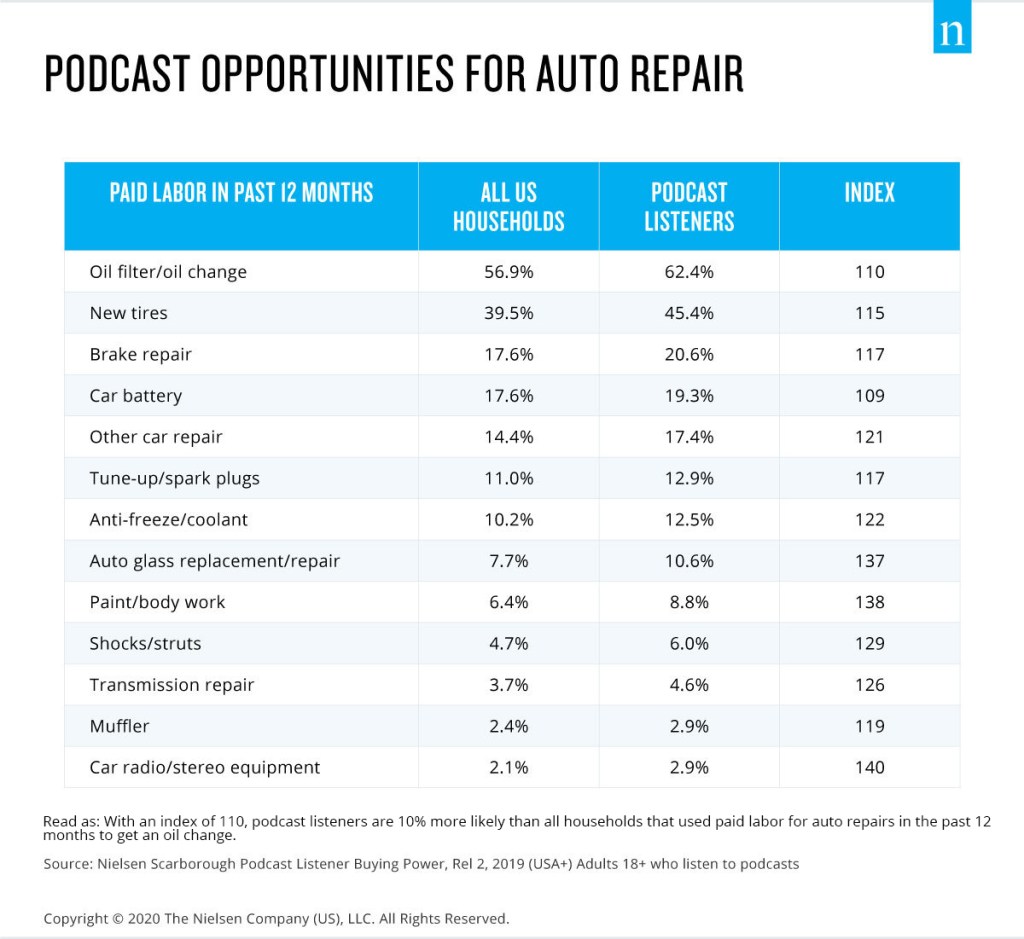
This offers a vacuum for industries like auto repair. These companies are now able to access their target audience at the perfect moment.
Podcast Advertising Statistics
Interest has spiked due to the hands-free, eyes-free nature of podcasts. Contrary to Netflix or Hulu advertising, most consumers are willing to listen to entire podcasts, complete with commercials. Where your television audience might skip your commercial for a bathroom break, your podcast audience are with you through the end!
90% of video streamers subscribe to paid platforms (thank you Disney + and Apple TV+), but only 27% of audio streamers subscribe to paid platforms. That means that 83% of streamed audio is ad-supported. While video streaming platforms can forego ads in place of a subscription-based revenue stream, free podcasts need sponsorship to stay afloat. That gives advertisers the perfect combination of buying power and an engaged audience in every campaign.
Search Engine Optimization giant, Ahrefs, ran a podcast advertising campaign in 2018 for $50,000 and uncovered it’s true value as a brand awareness technique. Since then, brands of all sizes have run successful top-of-funnel campaigns through all types of podcasts.
Consumers have listened and responded with open wallets.
How To Advertise On Podcasts
There are three categories of ads on Podcasts:
- Pre-roll: beginning of the podcast
- Mid-roll: midway through the podcast
- Post-roll: end of the podcast
You can promote your message through different timeslots, which vary by each podcast, but five experts from HubSpot have proven 60-second and 90-second advertising spots most effective in previous years.
While it can occur in several ways, the best delivery of your message in podcast advertising is baked-in ads. These are delivered seamlessly by the podcaster and are native to the show.
Other types of Podcast Ads, as cited by True Native Media are:
- Live-read ads: podcasters read your advertisement from a script on the air.
- Pre-produced ads: a voice-over artist is hired exterior to the podcast who promotes your product. The ad is placed into the podcast during commercial breaks.
- Dynamic ad insertion: think pre-produced ads, except podcast producers can choose from several and your ad might be placed at a more optimal part in the show.
You could advertise with podcasters off the air. Those with a large blog, email or social media presence could link to you through one of those channels. Other podcasters may be willing to do a live show at a location of your choice (event, restaurant, etc.) through a sponsorship.
How To Get Advertisers For Your Podcast
Those who already have successful podcasts may be ready to take the next step. Hiring advertisers for your podcast generates revenue that could pay for more expert opinions on your show, more tools for exploring concepts or stories, or simply paying for your new, lavish lifestyle you’re enjoying from hosting an entertaining podcast.
Join A Podcast Advertising Network
Some podcasters opt-in for advertising networks like Midroll or AdvertiseCast. These companies will list your podcast and sell advertising space to others for you.
Be prepared to defend the quality of your podcast with statistics because most advertisers shopping through these platforms will be tied to hard numbers, rather than niche audiences.
Find Advertisers On Your Own
Some podcasters have no interest in relinquishing control of their podcast baby, especially to the hands of larger companies that may not have anything to do with your podcast. They might choose to find advertisers on their own.
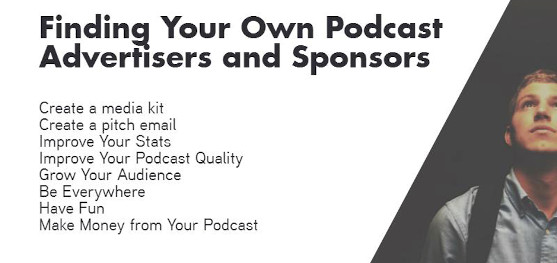
The most important items for securing advertisers are your media kit and your pitch email.
A one-page media kit contains all the aspects of your podcast that advertisers would want to know – for instance, a podcast media kit might contain:
- A meaningful, descriptive main sentence
- A short biography of the podcasters and the podcast (1 paragraph)
- The purpose of your podcast (are you teaching, entertaining, driving action? How?)
- The release dates for your podcast (Mondays at 1pm, first Sunday of each month, etc.). Do you have special events coming up?
- A link to your podcast
The pitch email for your podcast should be short and sweet. Focus on how advertising on your podcast could really help the sponsor and be sure to include a recommended package (with pricing) from which your advertiser could especially benefit.
Podcast Advertising Rates
Pricing a podcast for your sponsors occurs in two ways:
- Flat fee: sponsors pay the industry standard of $18-$25 per thousand downloads, or some other agreed upon price.
- Bonuses: in some cases, marketers will pay a bonus “per acquisition.” If your podcast audience makes a purchase from your sponsor, they may be willing to pay a small fee per purchase.
You could always ask for a price-per-acquisition rate instead of a flat fee. In that case, it would be your responsibility to make sure your listeners made purchases on the affiliate’s website.
Most don’t recommend this plan, however, since a lot rides on the company you’re working with having a competent business. The safer play is a flat fee with an acquisition bonus structure.
Podcasts vs. Radio Advertising
Radio advertising has been the normal in our lives for so long, but is it still worth it in 2020? Radio reaches 93% of the population each week, but the rise of podcasts has decimated radio numbers as consumers found other ways to pass the time on long drives to and from work.
“Light” podcast listeners still spend around 10 hours per week listening to podcasts, and heavy users could spend up to 25. While the reach of radio is vast, most companies prefer to target users for lower costs per valuable lead. Radio doesn’t allow for that.
Some other considerations that come into play with radio are:
- Expectation of music: users want to listen to music rather than speaking.
- Day-parting of ads: you could spend way more for a prime-time spot than a late-night spot.
- Audience engagement: because radio shows juggle music, weather updates, news and radio shows, you may find a much less engaged audience.
Radio seeks to reach an extremely broad audience. As amazing as your business may be, there’s just no way that 93% of the population’s interested in it. To any business trying to appeal to a specific audience – and that should be all of you – you might find more of what you’re looking for in podcasts.
Resources:
http://truenativemedia.com/the-different-types-of-podcast-ads/
https://blog.hubspot.com/marketing/podcast-advertising
https://bellocollective.com/how-to-get-podcast-sponsors-72e3ee81c57d
https://www.nielsen.com/us/en/insights/article/2020/podcast-content-is-growing-audio-engagement/


