


However old you are; however tough you are, media has at some point moved you emotionally.
Maybe it was the movie “Inside Out,” when Riley got back home from running away and cried with her parents about missing Minnesota. Maybe it was Up, where the old man shared an entire life with the woman he loved, only to have her taken from him for the entire movie. Maybe it was the Darth Vader reveal, or the Fight Club reveal or maybe Shutter Island.
Regardless of how these movie examples have impacted your emotions, was there any point where you felt compelled to get up from you seat and leave the theater?
No way! At these emotional pinnacles, you’re committed to the long haul, and will take any action necessary to see the matter resolved.

Your advertisements can have the same effect. Emotional Advertising is a very high-level (and very dangerous) form of appealing to your consumers. It uses emotions in advertising to drive a consumer toward an action, like a purchase.
Remember Proctor & Gamble’s “The Best A Man Can Be” campaign? It encouraged men to “shave their toxic masculinity” with Gillette products. While many found the campaign inspirational, others found it outrageous. Opinions aside, everyone was talking about Gillette for an entire month.
Another emotional whirlwind happened just this year. This holiday season, Apple released a commercial where two girls give their grandpa an iPad mini scrapbook of their grandmother who passed away. That ad spoke to consumers’ hearts, not their minds.
In the mind, we make product decisions. In the heart, we make brand decisions.
The main difference between rational and emotional marketing is the appeal to consumer. With rational advertising, you would make a business claim that a product works better than another or is priced lower. The ad below shows the rational claims produced by mortgage loan companies who want you to prequalify with them.
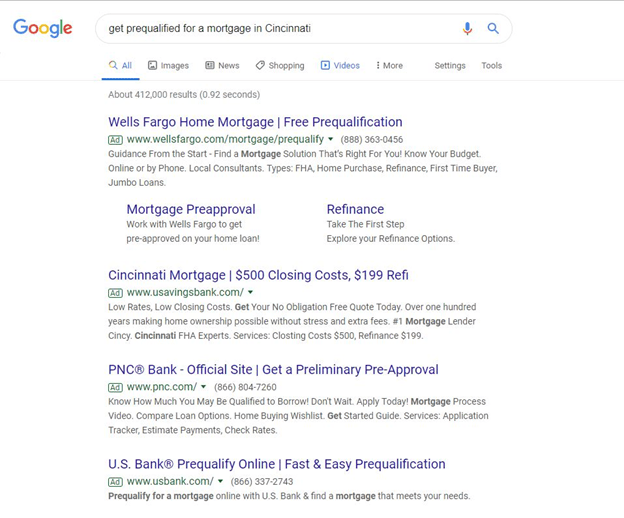
Notice the “$500 closing costs” and the “Fast & Easy Prequalification” claims. Great claims, but they don’t exactly tug at a customer’s heartstrings. These kinds of ads work great for big purchases because when spending a lot of money, consumers want to educate themselves and learn from facts.
Emotional purchases, on the other hand, are largely impulsive. Historically, advertisers have capitalized on that split-second decision by advertising only within that timeframe. The toy in the cereal box, the yellow tag at Kroger, and the candy bars at the end of the checkout line are all examples of this.
In recent years, and presumably fueled by competition in such mediums as the Super Bowl and Hollywood Award ceremonies, large companies have aligned with consumers at the self-actualization level of Maslow’s Hierarchy of Needs. Here, they make the (very difficult) claim that people need their brand to achieve self-actualization.
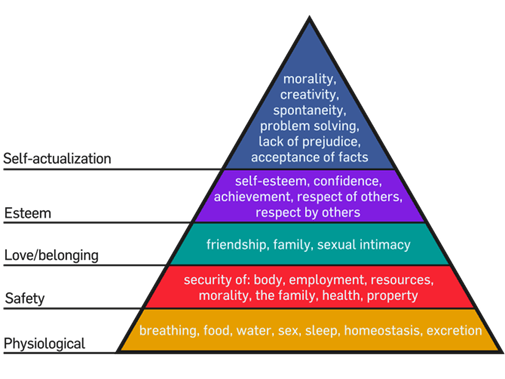
This claim is extremely difficult to pull off and is foregone by most advertisers for two reasons:
- It can easily backfire
The moral backlash of the Nike campaign backing ex-quarterback Colin Kaepernick was incredible. You’ve heard the stories of individuals burning Nike products because they were so infuriated.
Nike’s sales in this case, however, took off because the brand delivered the message in a way that inspired more people than it offended.
- It’s difficult to align a concept of self-actualization to a brand.
Watch the video below. In the “Thank You, Mom” Olympics campaigns by Proctor & Gamble, the company did not explicitly reference any of their brand attributes during the commercial. The only reference to the company came at the end, “Proud Sponsor of Moms.”
That simple callout means everything to their consumers, though, because mothers represent an emotional connection to each of their consumers, and P&G attached that connection to their brand. Sponsoring “moms” cost them millions to show on an Olympics advertisement but won over twice that much money in loyal customers.
The first of these “thank you mom” campaigns in 2010 was P&G’s most successful global campaign in company history.
So now the question becomes: should I use emotional marketing for my business?
My answer is a very simple yes. Emotional marketing is much more impactful than rational marketing. When you advertise the benefits of a four-blade razor technology, you’re really advertising a problem solved: the consumer’s solution to razor burn. One is rational, one is emotional. Both can fit in a single ad, but the emotional ad drives a much stronger consumer response and is scientifically proven to sway buyers.
I would use emotional marketing less when working on very large sales. While advertising for a “warmer lifestyle” is great in a Volkswagon Jetta ad, many consumers have a predefined checklist of necessary purchase qualities. They’d like to explicitly see “heated seats,” “free returns after 60 days” or “$0 down” before they engage further with your ad.
This concept also equates to amounts of emotion at different parts of the buying funnel. You have more opportunity for emotional marketing the further up the buying funnel you are. Buyers researching trips to Florida will consider Disney’s emotional commercial far more than buyers already in Florida choosing between Universal Studios and Disney World for their next day’s activities.

In that much narrower search, an advertiser will have vastly more success with rational callouts. Things like “$30 off this weekend” and “Top-rated park in the nation” drive Disney World sales at the bottom of the funnel because consumers are very close to spending money already, they just need a push in your direction.
Use emotional marketing to align with consumers’ values early in the buying funnel. It’s best used with smaller products or those that require split second decisions at the moment of purchase. Near the actual moment of purchase, use rational advertising to sway the user toward your product.
Resources:
- https://blog.hubspot.com/marketing/emotions-in-advertising-examples
- https://smallbusiness.chron.com/difference-rational-emotional-marketing-23661.html
- https://www.forbes.com/sites/work-in-progress/2014/03/05/the-psychology-and-philosophy-of-branding-marketing-needs-and-actions/#79c1310e725a
- https://www.wk.com/work/p-and-g-thank-you-mom/
- https://www.towerdata.com/blog/customer-heartstrings-emotional-marketing-advertising
- http://www.aupair.org/blog/10-facts-about-cereal-companies-putting-toys-in-the-box/
- https://www.simplypsychology.org/maslow.html
- https://www.nytimes.com/2018/09/03/sports/kaepernick-nike.html
- https://instapage.com/blog/emotional-marketing
- https://www.searchenginepeople.com/blog/emotion-marketing.html


